
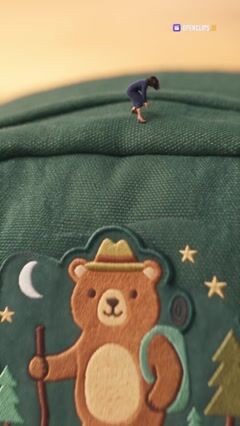
CHARACTER LOCK — HIGHEST PRIORITY: The person in every shot is exactly the person in @image1. Preserve their facial identity, facial structure, eye shape and spacing, eyebrows, nose, mouth, exact skin tone, hairline, hairstyle, hair length, texture and colour, freckles and distinctive marks, apparent age, build and body proportions — identically, shot to shot. Preserve their gender presentation exactly as shown; do not masculinize, feminize or otherwise reinterpret it. Do not beautify, slim, de-age or restyle them. Refer to them only as they/them in this prompt. ATTACHED IMAGES ARE MANDATORY AND FINAL: The attached images outrank every word written below them. Wherever an attached image and this text disagree, follow the image — including the product’s exact shape, features and proportions. ASSET MAP: @image1 — the tiny person, exactly as shown — face, hair, skin, and every clothing item and accessory unchanged and not regenerated, in every shot they appear. Ignore the grey studio pad around @image1 — that pad is not a set. Never freeze on the attached still as frame 0. Never show a checkerboard or transparency grid. @image2 — the product, exactly as shown, unchanged and not regenerated — same shape, colour, materials, label/logo/patch and hardware in every shot it appears. Ignore any table, wall or surface visible behind it in the reference image — that is not a second landscape. No giant wearer. No other people, hands, or faces enter frame at any point. HANDS: hands are always anatomically correct with five fingers each, naturally proportioned, in every shot they appear. SINGLE SUBJECT: only @image1 appears as a person — no other people. SCALE REALISM: @image1 is shrunk to only a few centimetres tall relative to @image2, which stands at its true full size — like a towering landmark. Match lighting and colour grade between the tiny person and the product throughout so the whole shot reads as one real photograph, not a composite. The size contrast must be clearly visible in the very first frame, not revealed later. PROP CONTINUITY: the small bridging object (a twig or leaf found nearby) is introduced in Scene 2 and used once to cross the gap — it does not appear before that point and is not reused afterward. CAUSALITY LOCK: every movement has a shown cause — the near-slip happens because their foothold gives way, visibly, and their catch/recovery is a direct, physical reaction to it, not an unexplained recovery. Do NOT default to a calm, mostly-still shot. Shot 1 must open already in motion. SCENE: @image1, shrunk down, is partway up the side of @image2, which looms above them like a giant landmark. The product’s real shape and distinctive features, exactly as shown in @image2, read as an oversized landscape — no invented parts, functions or textures that do not match @image2. Warm natural lighting, shallow depth of field, whimsical live-action macro realism. Believable physical interaction with the product’s real surface. 0–3s: Already mid-climb, @image1 scrambles along one of the product’s natural features, moving with effort and momentum, when they reach a wide gap between two distinct parts of the product’s surface — too far to jump. 3–6s: They spot a small twig or leaf lying nearby, drag it over, and wedge it across the gap as a makeshift bridge. They test it with one foot before committing. 6–8s: Halfway across, their foothold on the bridge shifts and gives way slightly — they wobble, arms pinwheeling, and grab the edge of the product just in time to catch themselves, dangling for a beat before pulling back up onto solid footing. 8–12s: Shaken but grinning, they finish the climb up the last stretch of the product’s surface and reach the top — the highest distinctive point of @image2 — standing tall, arms raised, looking out over the giant product landscape below. The full scale contrast between them and @image2 is clearly visible in this final frame. AUDIO: natural foley only — surface rustle, tiny footsteps, a twig scrape, a short effort sound on the catch, a breath of relief at the top. No music, no BGM, no voiceover, no narration. No on-screen text, no watermark, no subtitles.
Drag the clip sideways
ASSET MAP: @image1 — the creature, exactly as shown, unchanged and not regenerated — same colour, pattern, skin/surface texture, limb count and proportions in every shot it appears. ATTACHED IMAGE IS MANDATORY AND FINAL: The attached image outranks every word written below it for the creature’s anatomy. Photocopy the creature in @image1 exactly — colour, skin, fins, eyes, limbs and suckers as shown. Same limb count as @image1. No extra limbs, no missing limbs, no humanoid features. @image1 is the creature’s body only. Do not reproduce the deep-ocean rocks, bioluminescent fish, submersible, searchlight beam, or dark underwater lighting from the still. Those are not part of this film. The setting below is a working fishing boat in overcast daylight. ANATOMY LOCK — HIGHEST PRIORITY: This is one intact squid. Mantle, head, arms and both long tentacles stay connected as a single animal in every frame. When the crew loosen and pull the net away, only mesh and water move off the creature — no arm or tentacle detaches, severs, or lies as a separate piece on the deck. CAUSALITY LOCK: every movement has a shown cause — the net is lowered by the visible winch/boom, the creature’s motion begins only after the net loosens around it, and the water splash happens only because of the creature’s own visible body movement. PROP CONTINUITY: the net, winch, boom, and deck layout are established in the opening frame and remain consistent throughout — nothing new appears later that wasn’t already there. Create a 15-second, ultra-realistic found-footage video of two crew members hauling an unusually large sea creature (@image1) aboard a working fishing boat. Recorded by an unseen crew member standing on deck. CAMERA AND LIGHTING: Authentic casual smartphone footage — slight hand shake, imperfect framing, ordinary autofocus, natural motion blur, realistic digital zoom. The recording device and its operator stay out of frame. Bright overcast daylight, neutral colours, soft shadows, wet surfaces, worn fishing equipment, ordinary grey sea. Natural skin/texture rendering, no cinematic lighting or beauty filters. Observer stays several steps inside the deck, with a clear view of the net, both crew members, and the creature. The boat rocks gently. SETTING AND SUBJECT: A working fishing boat with a broad wet deck, metal gunwale, and a small hydraulic lifting boom. Two crew members wear waterproof jackets, rubber gloves, and work boots. A heavy fishing net hangs from the boom above the deck, the winch supporting its weight while the crew guide and open it. Inside is the creature (@image1), unusually large, its body filling much of the net. CONTINUOUS ACTION: Start MID-HAUL — the dripping net is already being brought aboard, suspended just above the deck, its load filling much of the frame. Part of the creature’s body protrudes through the loose netting, shifting slightly. The unseen person filming reacts immediately: “That thing is huge — what is that?” The winch lowers the net onto the clear deck. Water drains across the boards. The creature’s weight visibly settles onto the surface before the crew loosen the net. One crew member pulls the slack mesh away from one end of the creature while the other draws it clear from the opposite end. The creature stays in the same position as the net opens around it. Arms and tentacles stay attached. The view makes a short, slightly uneven digital zoom toward the creature’s body, then adjusts to reveal more of it beneath the wet netting — its eye, matching @image1, slowly shifting toward the nearest crew member. Hold this discovery briefly, with audible breathing from behind the camera. Then the creature abruptly makes a sudden, forceful full-body movement, striking the wet deck and throwing a sheet of water toward the crew. Both crew members recoil in separate, instinctive movements, releasing the loose mesh and stepping away. The person filming shouts: “It’s moving!” The view quickly zooms back out to keep the creature and the retreating crew visible. A brief startled shake interrupts the framing, but the creature stays readable as one intact squid. End at 15 seconds with the creature raised slightly off the deck, oriented toward the person filming. The loosened net remains beneath and beside it. SOUND AND CONTINUITY: Natural live audio only — winch motor, water draining, quiet boat engine, wind, wet netting, boots on deck, the impact of the creature’s movement, startled breathing, and the two short reactions. No music or added horror sound effects. One uninterrupted recording at normal speed — no cuts, hidden transitions, slow motion, or external viewpoints. Do not generate: subtitles, on-screen graphics, watermark, recording interface, distorted anatomy, extra limbs or body parts beyond what @image1 shows, a detached tentacle, or any humanoid features.
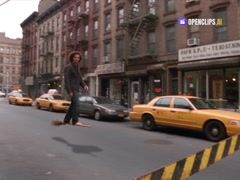
CHARACTER LOCK — HIGHEST PRIORITY: The person in every shot is exactly the person in @image1. Preserve their facial identity, facial structure, exact skin tone, hairline, hairstyle, hair length, texture and colour, freckles and distinctive marks, build and body proportions — identically, shot to shot. Preserve their gender presentation exactly as shown; do not masculinize, feminize or otherwise reinterpret it. Do not beautify, slim, de-age or restyle them. Refer to them only as they/them in this prompt. ATTACHED IMAGE IS MANDATORY AND FINAL: The attached image outranks every word written below it: wherever the attached image and this text disagree on the FACE, follow the image. ASSET MAP: @image1 — the person. Photocopy @image1 for face, hair, skin and identity only. Do not copy the olive-green quarter-zip, the white crew t-shirt, the crossed-arms studio pose, or the lounge interior from the still. Ignore any pad around the still — that pad is not a set. Never cut to the attached still as frame 0. WARDROBE — TWO LOOKS ONLY: - 0–8s (bedroom wake, then kitchen coffee): pajamas only — a matching sleep set (soft long-sleeve pajama top and pajama pants). No blazer, no office shirt, no street coat, no olive zip, no bag, no umbrella in this block. - 8–16s (getting ready in a dressing area / by the front door, NOT in the kitchen): they change out of the pajamas into formal first-day clothes — a dark tailored blazer over a light button-down shirt, tailored trousers. Pajamas off; formal on before they leave. Then they pick up bag and umbrella at the door. - 16–30s (wet city and office): formal clothes only. No pajamas on the street or at the office. Do not restyle hair. Do not mix the two looks in one shot. ROOMS — HIGHEST PRIORITY: The bedroom and the kitchen are two different rooms. - Bedroom: bed, window, rain on the glass. They wake HERE. - Then they WALK OUT of the bedroom through a doorway / hall into a real kitchen — separate space with a counter, cabinets, sink, and a coffee maker or kettle. Coffee is made ONLY in that kitchen. No coffee tray on the bed. No kitchen counter beside the bed. No brewing in the bedroom. - Getting dressed happens after coffee, in a dressing area or at a mirror near the front door — not back in bed. UMBRELLA PHYSICS — HIGHEST PRIORITY: The umbrella never holds itself, never stands on its own, never floats, never hovers. Gravity. When the umbrella is open, one of their hands is visibly gripping the handle the entire time. When they check the time (watch or phone), the OTHER hand holds the umbrella — they do not let go. The umbrella does not stay upright without a hand. Closed umbrella is carried in a hand or tucked under an arm, never standing alone. HANDS: hands are always anatomically correct with five fingers each, naturally proportioned, in every shot they appear. SINGLE SUBJECT: @image1 is the only named subject — background pedestrians, drivers and passersby may appear naturally but are never named, aged or described by ethnicity/gender, only by generic role and action. Create a 30-second ultra-photorealistic live-action vlog of @image1 waking to a rainy morning in pajamas, walking to a separate kitchen to make coffee, changing into formal clothes, grabbing an umbrella, walking through a wet city, and arriving at a new office just before their first shift. Already in motion from frame 0 — never a frozen studio pose. 0–8s: @image1 wakes up in pajamas in the bedroom, glances out the bedroom window at the rain, sighs with a small smile, then walks through a doorway into a separate kitchen and makes coffee at the kitchen counter. Modern smartphone vlog style — natural handheld movement, subtle shake, autofocus changes. Dialogue: “Good morning… apparently, it’s raining. Perfect first-day weather.” 8–16s: @image1 gets ready away from the kitchen — taking off the pajamas, putting on the formal blazer and trousers, checking themselves in a hall/door mirror in the full formal look, grabbing their bag and picking up the umbrella with their hand by the door. Natural expressions, believable human movement. Dialogue: “First coffee. Then… new job.” 16–24s: @image1 walks through the wet city streets in the formal clothes. Umbrella is open and held in one hand the whole time. They navigate puddles, reflections, passing traffic and other umbrellas. If they check the time, the free hand does that while the umbrella hand keeps gripping the handle — the umbrella does not stand or float by itself. Realistic rain, wet clothing, natural pacing — not rushed. Dialogue: “Two minutes early. I’m impressed.” 24–30s: @image1 arrives at the office entrance in the same formal clothes, still holding the umbrella, shakes it off with their hands, takes a breath, and steps inside. Dialogue: “Okay… here we go.” CAMERA / REALISM: natural handheld movement, subtle shake, autofocus changes, realistic rain, puddles, reflections, traffic, umbrellas, wet clothing, natural expressions, believable human movement, no overly smooth gimbal look. Landscape 16:9. AUDIO: natural diegetic audio only — rain, footsteps, traffic, umbrella sounds, ambient city noise, and the spoken dialogue lines above. No music, no narration, no voiceover other than those lines. Do not generate: music, narration, CGI look, artificial rain, face changes, distorted anatomy, extra fingers or limbs, impossible physics, floating umbrella, coffee in the bedroom, subtitles, on-screen text, logos, or watermark. Never freeze on the attached still.
VERTICAL 9:16 30 seconds. Handheld selfie GRWM. Hard cuts. ONE person. No on-screen captions. No hat at any second. CHARACTER LOCK: the person is exactly @image1. Preserve face, hair, skin, age, build, gender presentation. Use they / their / them only. @image1 = FACE only. Photocopy this person. Do not copy studio wardrobe from the lock. WARDROBE: gold CROSS necklace always visible. Black denim jeans. They PULL ON a loose-fit brown t-shirt (already in jeans — skip a long shirtless intro). Brown leather belt. Brown leather cowboy boots. Gold ring. Hair uncovered, no hat. VOICE: casual influencer, clear English lip-sync. 0.0–8.0s Modern walk-in closet, white walls, black door. Eye-level selfie. Black jeans, pull on the brown t-shirt, step back, fasten the belt. VO: “What’s going on guys. Quick get ready with me. Throwing on this brown shirt and a belt.” 8.0–13.0s Hard cut. Hold brown cowboy boots to the lens, then they’re on. Close-up: gold ring onto a finger. VO: “Going with my nicest brown boots to match, and adding the gold ring.” 13.0–24.0s Hard cut. Bathroom, black marble. Small WHITE squeeze bottle with a BLUE cap to the lens. Open, dab on a finger, rub into face. Tight on face and product. VO: “But this right here is the main event. If you know, you know. You gotta keep the face fresh and hydrated.” 24.0–27.0s Same bathroom. Sleek BLACK cologne bottle. Two sprays on neck and chest. Confident nod. VO: “Quick spray of this cologne. Always gets a ton of compliments.” 27.0–30.0s Hard cut. Bedroom, large bed. Hand through hair — NO HAT. Step back, one arm slightly raised. VO: “Alright, that’s the final look. Let’s head out.” Same person every cut. Gold cross on. Hatless. No extra people. Never a studio still as frame 0.
CHARACTER LOCK — HIGHEST PRIORITY: The person in every shot is exactly the person in @image1. Preserve their facial identity, facial structure, eye shape and spacing, eyebrows, nose, mouth, exact skin tone, hairline, hairstyle, hair length, texture and colour, freckles and distinctive marks, apparent age, build and body proportions — identically, shot to shot. Preserve their gender presentation exactly as shown; do not masculinize, feminize or otherwise reinterpret it. Do not beautify, slim, de-age or restyle them. Refer to them only as they/them in this prompt. ATTACHED IMAGE IS MANDATORY AND FINAL: The attached image outranks every word written below it on the FACE: wherever the attached image and this text disagree on face, hair, or skin, follow the image. ASSET MAP: @image1 — the person. Photocopy @image1 for FACE, HAIR, SKIN and identity only. Do not copy any burgundy or wine dress, gold snake necklace, gold bracelet, crossed-arms studio pose, or white studio backdrop from the still. Ignore any pad around the still — that pad is not a set. Never freeze on the attached still as frame 0. WARDROBE: casual beachwear for a sunny public beach — a simple tank or short-sleeve tee and shorts WITH A REAL SIDE POCKET they can put a phone into. Barefoot or simple sandals. No formal dress, no silk blouse, no office look, no gold snake pendant. PHONE CONTINUITY — HIGHEST PRIORITY: the phone is a real physical object. It never vanishes, never teleports, never dissolves, never cuts away. While they walk and look at it, it is in their hand. BEFORE they pick up the volleyball or play, they visibly SLIDE THE PHONE INTO THE SHORTS POCKET. After that, the phone stays in that pocket through the pickup and the hit — both hands are free because the phone is in the pocket, not because it disappeared. Do not generate a play beat with empty hands and no pocket stow. HANDS: hands are always anatomically correct with five fingers each, naturally proportioned, in every shot they appear. OTHER PEOPLE: the volleyball players are background people only — never named, aged, or described by ethnicity/gender, only by role and action. CAUSALITY LOCK: the ball only moves because of a shown cause — a player’s bad pass, it bouncing off @image1's back, them picking it up, and them serving it — never on its own. PROP CONTINUITY: it is the SAME volleyball throughout — never duplicated, never swapped. The SAME phone throughout. SETTING: sunny public beach with a real outdoor beach volleyball court in warm late-afternoon light. Sand, a few beach chairs, a fence line, players, and ONE clearly visible net visible from frame one. A few people casually play volleyball. @image1 walks beside the court, looking at their phone, wearing the casual beachwear above. CAMERA: normal handheld phone footage by another person nearby. Natural shake, imperfect framing, mild motion blur, small autofocus/exposure shifts. No cinematic moves. ONE continuous handheld shot, no cuts. 00:00–00:04 @image1 walks beside the court, focused on their phone held in one hand. The players play normally behind them. One player makes a bad pass; the same volleyball flies out of the court, lightly hits @image1 in the UPPER BACK, then drops to the sand beside them. They never see it coming. Phone still in their hand. 00:04–00:07 They turn, surprised. They put the phone into their shorts pocket — a clear, visible stow, phone going into the pocket, hand coming out empty. Then they pick up the same ball. One player calls: “Hey! Serve it back!” 00:07–00:10 Phone is in the pocket. Still facing mostly AWAY from the net, @image1 casually tosses and hits the ball BACKWARD over one shoulder without looking at the net. One clean hit only. Both hands are on the ball/hit because the phone is already in the pocket. Camera quickly follows the ball. 00:10–00:13 The ball flies in a realistic arc and drops cleanly on the other side of the net, in bounds, for a clean point. The players freeze, then react in genuine disbelief. One shouts: “No way!” Phone still in the pocket. 00:13–00:15 Camera returns to @image1. They give a tiny casual glance back, then take the phone back out of the pocket (visible draw) and keep walking along the sand looking at the phone like nothing happened. IMPORTANT: ball hits their BACK, NEVER their legs; net visible from frame one; same ball only; one backward hit; phone goes IN THE POCKET before they play and only comes out after; no cuts, duplicated ball, disappearing phone, distortions, extra limbs, or cartoon behavior. Realistic physics and reactions. Already in motion from frame 0. AUDIO: beach/park ambience, ball bounces, voices, footsteps, the ball landing, surprised reactions. No BGM. Do not generate: subtitles, on-screen text, watermark, logos, distorted hands, extra fingers or limbs, the studio still as a cutaway, burgundy dress, gold snake necklace, a vanishing phone.
Photoreal 15-second 9:16 fitness coach video. Sound ON. The person in every frame is exactly the person in @image1. Preserve their face and gender presentation. Not a cartoon. OUTFIT: grey t-shirt, dark joggers, lime wristbands. SET: real gym. Already in the gym. Never a grey studio headshot. 0–4s: looks at camera and says clearly, loud: "Today I'm showing you squats, push-ups, and a plank." 4–8s: SQUATS. Two clean reps. "Sit back, chest up." 8–12s: PUSH-UPS on the mat. Two reps. "Core tight." 12–15s: forearm PLANK. "Hips up." Hold. Voice must be loud and intelligible. No on-screen text in the generated footage. Duration 15s. Aspect 9:16.
CHARACTER LOCK — HIGHEST PRIORITY: The person in every shot is exactly the person in @image1. Preserve their facial identity, facial structure, eye shape and spacing, eyebrows, nose, mouth, exact skin tone, hairline, hairstyle, hair length, texture and colour, freckles and distinctive marks, apparent age, build and body proportions — identically, shot to shot. Preserve their gender presentation exactly as shown; do not masculinize, feminize or otherwise reinterpret it. Do not beautify, slim, de-age or restyle them. No face changes, no identity drift. No other people share their face. Use they / their / them only. ATTACHED IMAGES ARE MANDATORY AND FINAL: If an avatar image is attached, that is the person — reproduce them exactly, in every single frame, and never invent a different face, hairline, hair colour, skin tone, body or age. The attached images outrank every word written below them: wherever an attached image and this text disagree, follow the image. ASSET MAP: @image1 — the character. @image1 is face, hair, skin and identity only. Ignore the café, bookshelves, window street, espresso machine, and any beige pad around the still — that pad is not a set. Wardrobe is comfortable at-home loungewear from the scene (soft knit, lounge pants) — do not treat the still as a frozen smiling headshot, and do not copy the café as the location. SINGLE SUBJECT: only @image1 appears in this video — no other people, hands, or faces enter frame at any point. HANDS: hands are always anatomically correct with five fingers each, naturally proportioned, in every shot they appear. PROP CONTINUITY: the laptop, the blanket, and a mug on the side table are all present from Scene 1 onward — nothing new appears later that wasn’t already established (only refills/accumulation of the same mug, shown clearly as a growing stack, not a new object type). Unmarked laptop — no brand logos on the lid. CAUSALITY LOCK: every prop change has a shown cause — the mug stack grows only through visible refill actions across the cuts, the window light shifts only through a natural time-lapse of the sky, and the laptop/room-scale shift in Scene 4 is an intentional stylized visual metaphor, not a continuity error. OPENING LIGHTING — HIGHEST PRIORITY FOR 0–4s: Do not open on an empty couch, a blown-out lampshade, a dark hallway, or a person entering from the shadows. Frame 1 already has @image1 in a medium shot on/near the couch, face fully in frame and fully readable. Warm practical lamp light plus a soft fill so skin, eyes and hair are correctly exposed from the first frame — cozy, even, cinematic, not gloomy, not silhouette, not spotlighted from behind. The lamp is a light source in the room, not the subject. No underexposed doorway, no motion-smear collapse as the first beat. Create a short cinematic, humorous lifestyle video about someone who refuses to sleep because they finally have time for themself after work — this time, the trap is “just one more episode.” SCENE 1 — 0–4s: Late evening, already home. Warm, even lamp lighting on @image1 from frame 1. They drop their bag beside the couch, settle into comfortable loungewear, and sit down — face readable the whole time. Exhausted but relieved, they reach for a laptop already on the couch. Exposure stays correct on their face. SCENE 2 — 4–8s: They settle under a blanket and dim the room lights (a visible, motivated dim — not a sudden blackout). They open a streaming show on the laptop. The laptop’s glow mixes with the remaining warm lamp. A soft whispered voice-over: “Just one more episode.” They press play, smiling. Face stays readable. SCENE 3 — 8–12s: A cinematic time-lapse of the night passing — shown only through the sky outside the window steadily darkening and the moon rising higher, never through any on-screen clock or number. Intercut quick beats of @image1 still watching, eyes growing progressively more tired, soft dark circles slowly deepening under their eyes with each cut. The mug on the side table is refilled again each time, the stack quietly growing taller. Faces stay lit enough to read. SCENE 4 — 12–15s: Visual metaphor, stylized and surreal: the laptop screen appears to loom larger in frame while @image1 curls smaller beside it, as if the show is consuming the night. Their dark circles read as soft, ink-like shadows beneath their eyes. Still enough light on the face to hold identity. SCENE 5 — 15–18s: Close-up on @image1's face, lit by a mix of leftover lamp warmth and laptop glow, heavy-eyed. They glance at the tall mug stack beside them, then back at the screen — and immediately click to the next episode anyway, whispering “Just one more...” Cut to black as the faintest hint of dawn light touches the window. STYLE: cinematic realistic lifestyle film, relatable internet humor, warm even lamp lighting at the open mixed later with cool laptop-screen light, subtle exaggerated dark circles, expressive facial acting, smooth camera movements, realistic skin and fabric, shallow depth of field, natural handheld moments, tasteful comedy, premium social-media reel aesthetic, seamless time transitions, highly polished visual storytelling. Vertical 9:16. Never freeze on the reference still. CAMERA: Scene 1 opens already as a medium shot on their face and upper body — not a foreground couch/laptop still-life with them out of focus in the back. Then close-ups, medium shots, natural handheld moments, shallow depth of field, natural focus transitions. AUDIO (native, synced, no BGM, no extra music): home-evening ambience, bag drop, fabric and blanket, laptop keys/trackpad, a soft whispered “Just one more episode,” mug refill clink, then a last whisper “Just one more...” No karaoke, no soundtrack bed. Do not generate any legible on-screen text, subtitles, numbers, clocks, or timestamps anywhere in frame. No BGM, no watermark, no logos, no distorted hands, no extra fingers or limbs, no duplicated people, no flickering, no sudden identity changes.
CHARACTER LOCK — HIGHEST PRIORITY: The person in every shot is exactly the person in @image1. Preserve their facial identity, facial structure, exact skin tone, hairline, hairstyle, hair length, texture and colour, freckles and distinctive marks, build and body proportions — identically, shot to shot. Preserve their gender presentation exactly as shown; do not masculinize, feminize or otherwise reinterpret it. Do not beautify, slim, de-age or restyle them. Refer to them only as they/them in this prompt. ATTACHED IMAGES ARE MANDATORY AND FINAL: The attached images outrank every word written below them: wherever an attached image and this text disagree, follow the image — including the product’s exact shape, features and proportions. ASSET MAP: @image1 — the tiny person. @image2 — the product, exactly as shown, unchanged and not regenerated — same shape, colour, materials, label and logo text in every shot it appears. HANDS: hands are always anatomically correct with five fingers each, naturally proportioned, in every shot they appear. SINGLE SUBJECT: only @image1 appears in this video — no other people, hands, or faces enter frame at any point. SCALE REALISM: @image1 is shrunk to only a few centimeters tall relative to @image2, which stands at its true full size — like a towering landmark. Match lighting and colour grade between the tiny person and the product throughout so the whole shot reads as one real photograph, not a composite. The size contrast must be clearly visible in the very first frame, not revealed later. Do NOT default to a calm, mostly-still shot. Shot 1 must open already in motion. SCENE: @image1, shrunk down, stands at the base of @image2, which now looms above them like a giant landmark, its real shape, curves, ridges, textures and any natural handles, caps, straps or edges reading as an oversized landscape. 0–2s: Already climbing/scrambling along one of the product’s natural features (a ridge, a strap, an edge, a textured surface) — in motion from the first frame, using the product’s real shape as handholds and footholds. 2–5s: They continue upward, using another distinct natural feature of the product (a different textured section, a curve, a seam) as the next obstacle — visibly different action from the first beat, not a repeat of the same climbing motion. 5–8s: Near the top, they reach the product’s highest or most distinctive point (its cap, its peak, its rim — whatever @image2 actually has) and pull themselves up onto it, slightly out of breath but triumphant. 8–10s: They stand on top of the product, hands on hips or arms raised, looking out over the “landscape” below with a proud, delighted grin. The full scale contrast between them and @image2 is clearly visible in this final frame. STYLE: whimsical live-action macro realism, warm natural lighting, shallow depth of field, believable physical interaction with the product’s real surface — no invented parts, functions or textures that don’t match @image2's actual design. No on-screen text, no watermark, no subtitles, no BGM.
CHARACTER LOCK — HIGHEST PRIORITY: The person in every shot is exactly the person in @image1. Preserve their facial identity, facial structure, exact skin tone, hairline, hairstyle, hair length, texture and colour, freckles and distinctive marks, build and body proportions — identically, shot to shot. Preserve their gender presentation exactly as shown; do not masculinize, feminize or otherwise reinterpret it. Do not beautify, slim, de-age or restyle them. Refer to them only as they/them in this prompt. ATTACHED IMAGES ARE MANDATORY AND FINAL: The attached images outrank every word written below them: wherever an attached image and this text disagree, follow the image. ASSET MAP: @image1 — the person. Photocopy face, hair, makeup, jewelry and the outfit they are wearing in @image1. Do not change their clothes. @image2 — the product, exactly as shown, unchanged and not regenerated — same bottle shape, glass colour, cap, neck, label and decoration exactly as shown. Photocopy that bottle in every shot it appears. Do not invent a different bottle, a spray nozzle that is not on @image2, a box, or extra hardware. HANDS: hands are always anatomically correct with five fingers each, naturally proportioned, in every shot they appear. SINGLE SUBJECT: only @image1 appears in this video — no other people, hands, or faces enter frame at any point. Unbranded scene: no extra logos, brand names, labels, monograms or readable signage added to the room. Any lettering already on @image2 is part of the bottle and must stay on the bottle; do not add subtitles, captions, or other on-screen type. Create a cinematic luxury commercial. @image1 stands in a softly lit space with clean natural lighting against a neutral studio-style background, in a quiet, unhurried moment. 0–3s: @image1 holds the product (@image2) with both hands toward the camera, presenting it. Close-up on their fingers lifting or revealing the cap in whatever way naturally fits its design. Five fingers on each hand. 3–6s: @image1 interacts with the product in a natural, deliberate, tactile way that reveals exactly how it is meant to be used — following the product’s own form exactly as shown in @image2. Lift the cap; bring the open bottle to an inner wrist or the side of the neck and apply with a slow, precise motion. No invented parts, no spray mist unless that hardware is visible on @image2, no incense burner, no extra props. 6–8s: @image1 pauses with a subtle, composed, satisfied expression — a quiet moment of confidence. They still hold the bottle. Same face as @image1. 8–10s: Final shot: the product (@image2) fills the frame in sharp focus, while @image1 is softly blurred behind it. Bottle shape, cap, glass colour and lettering match @image2 exactly. STYLE: soft natural lighting, shallow depth of field, high-end fashion-film aesthetic, slow elegant movements, premium commercial look, realistic skin and fabric texture. VOICEOVER (off-camera, not lip-synced): “One last touch before the moment begins. Make it yours.” Soft luxury-commercial delivery over quiet room tone. No music lyrics. Do not generate: any extra brand name, logo, readable subtitles, watermark, distorted hands, extra fingers, a second person, or a redesigned bottle.
CHARACTER LOCK — HIGHEST PRIORITY: The person in every shot is exactly the person in @image1. Preserve their facial identity, facial structure, exact skin tone, hairline, hairstyle, hair length, texture and colour, freckles and distinctive marks, build and body proportions — identically, shot to shot. Preserve their gender presentation exactly as shown; do not masculinize, feminize or otherwise reinterpret it. Do not beautify, slim, de-age or restyle them. Refer to them only as they/them in this prompt. ATTACHED IMAGE IS MANDATORY AND FINAL: The attached image outranks every word written below it: wherever the attached image and this text disagree on the FACE, follow the image. ASSET MAP: @image1 — the person. Photocopy @image1 for face, hair, skin and identity only. Do not copy the olive-green quarter-zip, the white crew t-shirt, the crossed-arms studio pose, or the lounge interior from the still. Ignore any pad around the still — that pad is not a set. Never cut to the attached still as frame 0. WARDROBE (scene, not the still): they wake in simple home lounge clothes, then put on a dark tailored blazer over a light shirt, grab a bag and a compact umbrella for a first-day commute. Do not restyle hair. HANDS: hands are always anatomically correct with five fingers each, naturally proportioned, in every shot they appear. SINGLE SUBJECT: @image1 is the only named subject — background pedestrians, drivers and passersby may appear naturally but are never named, aged or described by ethnicity/gender, only by generic role and action. Create a 30-second ultra-photorealistic live-action vlog of @image1 waking to a rainy morning, making coffee, getting ready, grabbing an umbrella, walking through a wet city, and arriving at a new office just before their first shift. Already in motion from frame 0 — never a frozen studio pose. 0–8s: @image1 wakes up, glances out the window at the rain, sighs with a small smile, and heads to the kitchen to make coffee. Modern smartphone vlog style — natural handheld movement, subtle shake, autofocus changes. Dialogue: “Good morning… apparently, it’s raining. Perfect first-day weather.” 8–16s: @image1 gets ready — putting on a blazer, checking themselves in the mirror, grabbing their bag and umbrella by the door. Natural expressions, believable human movement. Dialogue: “First coffee. Then… new job.” 16–24s: @image1 walks through the wet city streets, umbrella up, navigating puddles, reflections, passing traffic and other umbrellas. Realistic rain, wet clothing, natural pacing — not rushed. Dialogue: “Two minutes early. I’m impressed.” 24–30s: @image1 arrives at the office entrance, shakes off the umbrella, takes a breath, and steps inside. Dialogue: “Okay… here we go.” CAMERA / REALISM: natural handheld movement, subtle shake, autofocus changes, realistic rain, puddles, reflections, traffic, umbrellas, wet clothing, natural expressions, believable human movement, no overly smooth gimbal look. Landscape 16:9. AUDIO: natural diegetic audio only — rain, footsteps, traffic, umbrella sounds, ambient city noise, and the spoken dialogue lines above. No music, no narration, no voiceover other than those lines. Do not generate: music, narration, CGI look, artificial rain, face changes, distorted anatomy, extra fingers or limbs, impossible physics, subtitles, on-screen text, logos, or watermark. Never freeze on the attached still.
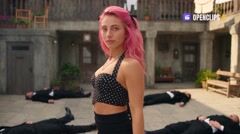 Courtyard KickSeedance 2.5 · 16:9 · 30sRecreate workflow