

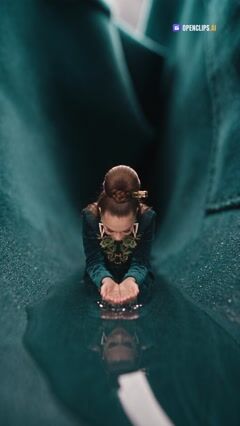
MOTION SOURCE — this recipe was reconstructed from a source clip hosted on this platform, which is the reference for the choreography: https://cdn.openclips.ai/community_workflows/3c31cff5-41fd-4c04-9704-df1df83a5657.mp4 (15s, 9:16, the original 'silly cat' dance — conformed to exact 9:16, audio intact) The dance beats written into step 2 were transcribed from that clip frame by frame at 2fps: the springy two-step, the alternating front paws, the knee lifts, the head bobs, the tail counterweight, and the wide-shrug and raised-paw accents. The one-legged spin is an addition, not in the source. IMPORTANT — the clip is NOT passed to the model, and cannot be. Two placements were tested and both fail: inside a step's params it is refused outright ('params carries videoUrl, which seedance-2.0 does not take'), and at step level it is accepted by the API and then silently dropped from the stored row. So step 2 DESCRIBES the choreography instead of copying it, and users get these moves at the model's own timing, not beat-for-beat with the source. If videoUrl is ever accepted on a step, attach the clip above as the motion reference on step 2 and the dance will be copied beat for beat — that is how the preview video on this workflow was actually produced (Seedance 2.0, videoUrl + character + backdrop reference, via a direct generate call rather than a workflow run). AUDIO: the source clip's own soundtrack cannot ride either — audio: 'original' needs Kling's videoUrl, and audioUrls is refused at render. Step 2 uses generateAudio instead, prompted for a silly bouncy beat.
Drag the clip sideways

MODEL: Seedance 2.5 — use this model specifically. Do NOT use MiniMax or any other model for this generation. FORMAT: Vertical video, 9:16 aspect ratio. DURATION: 12 seconds. AUDIO: Generate synchronized natural audio for this scene — soft ambient fabric rustling, a held breath as the subject hides, a loud metallic jingle when the keys are pulled out, then a relieved exhale and a soft triumphant exclamation at the end. No music, no voiceover, no narration. ASSET MAP: @image1 — the subject. SUBJECT LOCK — HIGHEST PRIORITY: Preserve the subject in @image1 exactly. Exact face, facial features, hairstyle, skin tone, build and gender presentation stay unchanged — only their scale changes. Do not beautify, restyle or alter identity. Photocopy @image1. Face, hair, skin, and the olive-green quarter-zip over the white tee from the still stay. POCKET READ — MUST BE OBVIOUS FROM FRAME 1: This is a real jeans FRONT POCKET on blue denim jeans worn at the hip of a different, full-sized adult (never the subject’s face). A first-time viewer must instantly recognise it as a clothing pocket — not a fabric cave, not a bag, not a tunnel of cloth. Camera sits OUTSIDE the garment, slightly above hip height, looking down and in through the pocket opening. In every frame keep visible at once: - the jeans: waistband, a belt loop, bartack stitching, rivet, denim weave - the pocket as a 3D pouch sewn onto the jeans, with a clear U-shaped opening and a folded pocket-edge hem - the tiny subject inside that pouch, a few centimetres tall Do not crop so tight that only fabric walls remain. If the pocket silhouette would leave the frame, pull the camera back. CONTINUOUS MOTION REQUIRED: Real, visible physical motion for almost the entire 12 seconds — a clear sequence of distinct actions (settle, alert, hide, reaction, climb, look out), never one static pose held for seconds at a time. SCENE: The subject, shrunk to a few centimeters tall, is inside that jeans pocket. A folded receipt and a set of keys rest on the fabric floor nearby. The pocket opening is above them. Indoors, soft natural window light from one side. The wearer of the jeans is a different full-sized adult — never give them the subject’s face. 0-2s: Wide enough to read the jeans pocket on the hip. Tiny subject sits comfortably inside the pocket bag, arranging the folded receipt like a small mat beneath them, settled and at ease. Waistband and belt loop still in frame. 2-4s: Bright light suddenly widens above as the pocket flap is pulled open — they look up sharply, alert, rising to their feet. The U-shaped pocket opening stays readable. 4-6s: A pair of giant fingers (the wearer’s, not the subject) reach down into the pocket, searching side to side. The subject scrambles and presses themselves flat into a fold of fabric in the shadowed corner, perfectly still, visibly holding their breath. 6-8s: The fingers close around the keys resting just beside the subject’s hiding spot and lift them straight up and out of the pocket — the keys jingle loudly, a gust of motion ruffling the subject’s hair and clothing as they pass close by. Keys and fingers are enormous next to them. 8-10s: The fingers withdraw and the flap falls closed behind them, light dimming back down. The subject peeks out from the fold, relieved, then breaks into motion, climbing quickly up the inner fabric wall toward the pocket’s rim. Pocket silhouette still in frame. 10-12s: They reach the rim and perch on the edge, silhouetted against the bright opening, looking out at the towering room beyond, then turn back toward camera and give a small triumphant fist pump, grinning. Waistband still readable. SCALE REALISM: Stitching, denim weave, keys and fingers are true size next to the tiny subject. Match lighting so it reads as one photograph, not a composite. No on-screen text, no watermark, no subtitles.

SUBJECT LOCK — HIGHEST PRIORITY: Preserve the male subject in @image1 exactly — photocopy his exact face, facial features, hairstyle, skin tone, build and gender presentation throughout. Do not beautify, restyle, de-age or alter his identity in any way. Only his scale changes. No other people share his face. @image1 is the subject. Keep the charcoal three-piece suit, white dress shirt, burgundy patterned tie, gold ring and metal wristwatch exactly as shown. Only size changes: he is a few centimetres tall. CLIMB LOCK — CRITICAL, THIS WAS WRONG LAST TAKE: He must climb like a normal person on a vertical cliff. The OPEN PALM is the GROUND he stands on. The SIDE of the giant hand / wrist is the WALL he climbs. Chest faces that wall. Both hands reach UP to skin folds above him. Feet push on the palm, then find footholds on the side of the hand. Head up, looking toward the watch. Face and front of the body readable to camera — he is on the CAMERA-FACING side of the hand, never the far/hidden/opposite side. FORBIDDEN (do not do any of these): - sitting, crouching or scooting on his backside along the inner wrist - treating the inner wrist as a floor he crawls across - climbing the far side of the wrist so we only see his back - hanging from the buckle before he has climbed - a watch worn on the inner/palm side of the wrist — the giant watch sits on the OUTER/DORSAL wrist, the normal place a watch is worn CONTINUOUS MOTION REQUIRED: Real, visible physical motion for almost the entire 12 seconds — climb, leap, swing, landing. Never one static pose. SCENE: The subject, a few centimetres tall, starts standing in the centre of an open human palm — a different, full-sized adult hand, not the subject’s own. Indoors, soft natural window light from one side. Photoreal. One continuous real photograph, not a composite. The giant wrist wears a fabric-strap watch on the OUTER wrist, high above him at the top of the climb. 0-2s: He stands upright on the centre of the palm (feet on palm skin — this is the ground). He looks UP the vertical side of the hand toward the watch on the outer wrist. He starts climbing that wall like a rock climber: both hands grab skin folds near the wrist ABOVE his head, feet push off the palm, body upright against the wall, face visible. Real effortful climbing. Not a sit. Not a scoot. 2-4s: Still chest-to-wall, he reaches the top of the outer wrist, braces with his feet on the side of the hand, and leaps UP to grab the edge of the fabric watch strap with both hands. He swings slightly on impact, then steadies. He arrived by climbing the wall, not by crawling along the inner wrist. 4-6s: The giant hand slowly rotates at the wrist, lifting him into the air still gripping the strap. He holds on tightly as the rotation carries him through a wide arc, hair and clothing blown by the motion, expression shifting from tension to excitement. 6-8s: At the peak of the arc, he lets go deliberately, pushing off with his legs into a controlled fall back toward the palm below. 8-10s: He lands on the palm in a tuck-and-roll to absorb the impact, rolling once across the skin before catching himself on one knee. 10-12s: He rises, dusts off his hands, plants them on his hips, and breaks into a confident grin, pumping one fist in the air in triumph. SCALE REALISM: Hand skin, wrist folds, strap stitching and fabric weave read at true full size relative to the tiny subject. Match lighting and colour grade. Camera wide enough that the climb up the wall, the leap to the strap, the arc and the landing all stay in frame. Never open on the attached studio still or a grey headshot. No on-screen text, no watermark, no subtitles. AUDIO: Synchronized natural audio — soft ambient room tone, fabric rustling as he climbs, a faint metallic clink from the watch strap, breathing and effort under the climb, a triumphant exhale and laugh at the landing. No music, no voiceover, no narration. 9:16. TOTAL DURATION: 12 SECONDS.

MODEL: Seedance 2.5 — use this model specifically. Do NOT use MiniMax or any other model for this generation. FORMAT: Vertical video, 9:16 aspect ratio. DURATION: 8 seconds. AUDIO: Generate synchronized natural audio — a low phone-vibration buzz that builds, coin and folded receipt rattling on denim, a startled yelp, a relieved laugh. No music, no voiceover, no narration. ASSET MAP: @image1 — the subject. Photocopy this person. PHOTOREAL LIVE-ACTION — HIGHEST PRIORITY AFTER IDENTITY: This must look like a real camera filmed a real tiny human inside a real jeans pocket. Not CGI, not a 3D figurine, not a doll, not a sticker, not a composite. Match grain, colour, and lighting between the person and the denim so they are one photograph. SUBJECT LOCK: Exact face, facial features, hairstyle, skin tone, build and gender from @image1. High blonde ponytail with the long braid over one shoulder, green satin button-down, gold necklace. Do not beautify or restyle. Only scale changes. SHE IS INSIDE THE POCKET BAG — NOT ON IT: The subject is a few centimetres tall and has climbed down INTO the pocket cavity. Fabric walls surround her. She sits on the inner fabric floor, not perched on the outside of the pocket like a brooch. Her legs and hips sink into the denim; cloth folds wrap her; she casts a contact shadow; she occludes the weave behind her. A real coin and a crumpled receipt share that same inner floor and are huge next to her. POCKET READ FROM FRAME 1: Camera slightly above hip height, looking down THROUGH the U-shaped pocket opening into the pouch. Keep in frame: blue-jeans waistband, one belt loop, bartack, copper rivet, denim weave, the folded pocket-edge hem, and the tiny person down inside. Instantly readable as a jeans front pocket on someone else’s hip — never her face on the wearer. Not a fabric cave, not a bag, not a tunnel, not a person glued onto the pocket front. LIGHTING: One soft indoor window from the side. The same light hits her skin and the denim. No separate beauty key on her. Pores, flyaways, fabric pills. Slight handheld micro-movement. CONTINUOUS MOTION: Real physical motion almost the entire 8 seconds. 0-1.5s: She sits inside the pouch, weight on the fabric floor, idly straightening the huge receipt. Denim around her. Waistband readable. 1.5-3s: A phone in another pocket starts buzzing. The whole pouch floor quivers. She grabs a fold. Coin and receipt hop and skitter. Denim ripples. 3-5s: Buzz intensifies. She stumbles and slides across the inner floor, arms wheeling, fabric throwing her — messy, physical, not posed. 5-6.5s: Buzz cuts. Momentum carries her into the inner wall. She catches herself, dizzy, blinking. 6.5-8s: She laughs, steadies, looks up through the pocket opening, small thumbs-up toward camera — still down inside the pouch, waistband in frame. SCALE: Stitching, rivet, coin and receipt are true size next to her. No gym, no banners, no second copy of her face, no on-screen text, no extra watermark, no subtitles.

15-second 16:9 ultra-realistic night alley gunfight. Rain, cyan/magenta neon, wet pavement, steam, crates. @image1 is fighter A (bomber / prosthetic). @image2 is fighter B (yellow mask / rifle). @image3 is the storyboard — photocopy outfits, alley, and beats. Do not describe appearance. Use they / their / them only. Extra attackers are anonymous masked extras. 0–2.5s: Wide whip-pan. Two masked extras emerge from steam. B snaps the rifle up. A drops to a low ready; prosthetic catches neon. 2.5–5s: Hard cut, low muzzle-flash close-up. B fires a burst. Brass arcs through rain. 5–7.5s: A sprints and drives the prosthetic into an extra’s chest. Extra crashes through crates. 7.5–10s: A grapples a second extra — deflect, elbow, throw to wet ground. Weapon skids away. 10–12.5s: B pivots, ejects mag, slams a fresh one, fires as a third extra’s cover is shredded. 12.5–15s: A and B back-to-back in the alley. Last extra drops. Smoke, steam, rain. Hold. No on-screen text, no HUD. AUDIO: rain, gunfire, brass, impacts, servo whir, heavy breath, no lyrics.


MODEL: Seedance 2.5 — use this model specifically. Do NOT use MiniMax or any other model for this generation. FORMAT: Vertical video, 9:16 aspect ratio. DURATION: 8 seconds. AUDIO: Generate synchronized natural audio for this scene — soft fabric rustling as the subject climbs and grips the pocket edge, a sharp metallic clink when the coin drops in, a startled gasp, and a genuine laugh at the end. No music, no voiceover, no narration. ASSET MAP: @image1 — the subject. SUBJECT LOCK — HIGHEST PRIORITY: Preserve the subject in @image1 exactly. Exact face, facial features, hairstyle, skin tone, build and gender presentation stay unchanged — only their scale changes. Do not beautify, restyle or alter identity. Photocopy @image1. Face, hair, skin, and the white collar/shirt from the still stay. POCKET READ — MUST BE OBVIOUS FROM FRAME 1: This is a real jeans FRONT POCKET on a pair of blue denim jeans worn at the hip of a different, full-sized adult (never the subject’s face). A first-time viewer must instantly recognise it as a clothing pocket — not a fabric cave, not a bag, not a tunnel of cloth. Camera sits OUTSIDE the garment, slightly above hip height, looking down and in through the pocket opening. In every frame keep visible at once: - the jeans: waistband, a belt loop, bartack stitching, rivet, denim weave - the pocket as a 3D pouch sewn onto the jeans, with a clear U-shaped opening and a folded pocket-edge hem - the tiny subject inside that pouch, a few centimetres tall, with the pocket bag huge around them Do not crop so tight that only fabric walls remain. If the pocket silhouette would leave the frame, pull the camera back. CONTINUOUS MOTION REQUIRED: Real, visible physical motion for almost the entire 8 seconds — distinct actions, never one static pose held for seconds. Indoors, soft natural window light from one side. The wearer of the jeans is a different full-sized adult — never give them the subject’s face. 0-1.5s: Wide enough to read the jeans pocket on the hip. Tiny subject sits inside the pocket bag, looking up at the opening and the light. Waistband and belt loop still in frame. 1.5-3.5s: They grip the folded pocket-edge hem with both hands and climb, hoisting themselves up until perched on the rim of the pocket opening, legs dangling over the outside of the jeans, catching their breath. The U-shaped pocket opening stays readable. 3.5-5s: The person wearing the jeans shifts their weight; the whole pocket pouch sways. The subject grips the hem tightly, body rocking, still clearly inside a jeans pocket on a hip. 5-6.5s: A coin drops in from above through the pocket opening and lands with a clatter beside them in the pouch — the subject flinches back, startled, both arms raised. The coin is enormous next to them. Pocket opening still visible. 6.5-8s: They relax, walk over and pick up the coin with both hands, straining against its size, then hold it up over their head in triumph, laughing — still standing inside the jeans pocket, waistband in frame. SCALE REALISM: Stitching, denim weave, belt loop and coin are true size next to the tiny subject. Match lighting so it reads as one photograph, not a composite. No on-screen text, no watermark, no subtitles.

SUBJECT LOCK — HIGHEST PRIORITY: Preserve the subject in @image1 exactly. Photocopy their exact face, facial features, hairstyle, skin tone, build and gender presentation. Do not beautify, restyle, de-age or alter identity. Only their scale changes. @image1 is the subject. Keep the navy square-neck top, gold coin pendant necklace, gold signet ring and gold chain bracelet exactly as shown. Only size changes: they are a few centimetres tall. CONTINUOUS MOTION REQUIRED: Real, visible physical motion for almost the entire 8 seconds — not a static pose. Something is always moving: the giant finger descending, the subject dodging, the grab, the swing, the landing. Do not default to a calm, mostly-still shot. SCENE: The subject, shrunk to a few centimetres tall, stands on an open human palm — a different, full-sized adult hand, not the subject’s own. The hand is held at roughly waist height, palm up, fingers relaxed and slightly spread, indoors with soft natural window light from one side so the skin texture and the subject both read clearly. Photoreal. One continuous real photograph, not a composite. SCALE REALISM: The palm’s skin texture, lines, and the finger’s fingerprint ridges must read at true full size relative to the tiny subject — every texture detail on the hand looks enormous next to them. Match lighting and colour grade between the subject and the hand throughout. Keep the camera framing wide enough that the entire arc of motion (finger descending, the grab, the swing, the landing) stays visible in frame. Never open on the attached studio still or a grey headshot. No on-screen text, no watermark, no subtitles. No other people except the giant hand that holds them. 9:16. TOTAL DURATION: 8 SECONDS. 0-1s: Subject stands calmly in the centre of the palm, weight settled, looking around at their surroundings. Full body of the tiny subject is readable. Palm lines look enormous next to them. 1-3s: A giant index finger slowly descends from directly above the frame toward the subject — clearly visible entering from the top, moving at a deliberate, readable speed, not too fast to track. As it nears palm height, the subject notices, reacts with a startled flinch, and dodges sideways just in time, the fingertip passing close beside them. 3-6s: Before the finger retreats, the subject changes their mind mid-motion — they lunge forward and grab onto the fingertip with both hands, fingers wrapped around the tip. The giant hand lifts slightly, carrying the subject a short distance up and sideways through the air in a small arc — a genuine swinging motion, not just a lift. The subject’s legs kick slightly, hair and clothing trailing with the motion, face showing visible thrill and a wide grin. 6-8s: The finger lowers the subject back down onto the palm. They let go, stumble half a step to find their footing, then straighten up and give the giant finger a playful pat with one hand, laughing. Original instrumental music throughout — cinematic, no lyrics, no known songs.

MODEL: Seedance 2.5 — use this model specifically. Do NOT use MiniMax or any other model for this generation. FORMAT: Vertical video, 9:16 aspect ratio. DURATION: 8 seconds. AUDIO: Generate synchronized natural audio for this scene — a low buzzing hum that builds as the vibration intensifies, the coin and folded receipt rattling against the fabric floor, a startled yelp, and a relieved laugh at the end. No music, no voiceover, no narration. ASSET MAP: @image1 — the subject. SUBJECT LOCK — HIGHEST PRIORITY: Preserve the subject in @image1 exactly. Exact face, facial features, hairstyle, skin tone, build and gender presentation stay unchanged — only their scale changes. Do not beautify, restyle or alter identity. Photocopy @image1. Face, hair, skin, the high blonde ponytail with the long braid over one shoulder, the green satin button-down, and the gold necklace from the still stay. POCKET READ — MUST BE OBVIOUS FROM FRAME 1: This is a real jeans FRONT POCKET on blue denim jeans worn at the hip of a different, full-sized adult (never the subject’s face). A first-time viewer must instantly recognise it as a clothing pocket — not a fabric cave, not a bag, not a tunnel of cloth. Camera sits OUTSIDE the garment, slightly above hip height, looking down and in through the pocket opening. In every frame keep visible at once: - the jeans: waistband, a belt loop, bartack stitching, rivet, denim weave - the pocket as a 3D pouch sewn onto the jeans, with a clear U-shaped opening and a folded pocket-edge hem - the tiny subject inside that pouch, a few centimetres tall, with the pocket bag huge around them - a coin and a folded paper receipt resting on the fabric floor nearby, enormous next to them Do not crop so tight that only fabric walls remain. If the pocket silhouette would leave the frame, pull the camera back. CONTINUOUS MOTION REQUIRED: Real, visible physical motion for almost the entire 8 seconds — a clear sequence of distinct actions, never one static pose held for seconds at a time. SCENE: The subject, shrunk to a few centimeters tall, is inside that jeans pocket. A coin and a folded receipt rest on the fabric floor nearby. Indoors, soft natural window light from one side so fabric texture and the subject both read clearly. The wearer of the jeans is a different full-sized adult — never give them the subject’s face. No gym, no banners, no second copy of the subject. 0-1.5s: Wide enough to read the jeans pocket on the hip. Tiny subject sits calmly inside the pocket bag, idly straightening the folded receipt beside them, at ease in their little space. Waistband and belt loop still in frame. 1.5-3s: A phone begins ringing in a nearby pocket — the entire fabric floor starts buzzing and shaking rhythmically beneath them. Startled, the subject grabs onto a fold of fabric to keep their balance as the coin and receipt rattle and skitter across the floor. The U-shaped pocket opening stays readable. 3-5s: The vibration intensifies. The subject stumbles and slides across the shaking fabric, arms wheeling, trying to stay upright as the whole pocket pouch trembles around them — a genuinely comedic struggle against the motion. Jeans waistband still in frame. 5-6.5s: The vibration cuts off abruptly. The subject, thrown off-rhythm, stumbles forward and catches themselves against the fabric wall, dizzy for a beat, blinking. Pocket silhouette still readable. 6.5-8s: They shake off the daze, laugh, straighten up, and peek upward through the pocket opening at the now-quiet world above, giving a small relieved thumbs-up toward camera. Waistband still readable. SCALE REALISM: The pocket’s real stitching, fabric weave and denim texture must read at true size next to the tiny subject — the coin, the receipt and every fold of fabric should look enormous relative to them. Match lighting and color grade between the subject and the fabric throughout so the whole shot reads as one real photograph, not a composite. Keep the camera framing wide enough that the shaking, the stumble and the recovery all stay clearly visible in frame. No on-screen text, no watermark, no subtitles.
MODEL: Seedance 2.5 — use this model specifically. Do NOT use MiniMax or any other model for this generation. FORMAT: Vertical video, 9:16 aspect ratio. DURATION: 8 seconds. AUDIO: Generate synchronized natural audio for this scene — soft fabric rustling as the subject climbs and grips the pocket edge, a sharp metallic clink when the coin drops in, a startled gasp, and a genuine laugh at the end. No music, no voiceover, no narration. ASSET MAP: @image1 — the subject. SUBJECT LOCK — HIGHEST PRIORITY: Preserve the subject in @image1 exactly. Exact face, facial features, hairstyle, skin tone, build and gender presentation stay unchanged — only their scale changes. Do not beautify, restyle or alter identity. Photocopy @image1. Face, hair, skin, and the white collar/shirt from the still stay. POCKET READ — MUST BE OBVIOUS FROM FRAME 1: This is a real jeans FRONT POCKET on a pair of blue denim jeans worn at the hip of a different, full-sized adult (never the subject’s face). A first-time viewer must instantly recognise it as a clothing pocket — not a fabric cave, not a bag, not a tunnel of cloth. Camera sits OUTSIDE the garment, slightly above hip height, looking down and in through the pocket opening. In every frame keep visible at once: - the jeans: waistband, a belt loop, bartack stitching, rivet, denim weave - the pocket as a 3D pouch sewn onto the jeans, with a clear U-shaped opening and a folded pocket-edge hem - the tiny subject inside that pouch, a few centimetres tall, with the pocket bag huge around them Do not crop so tight that only fabric walls remain. If the pocket silhouette would leave the frame, pull the camera back. CONTINUOUS MOTION REQUIRED: Real, visible physical motion for almost the entire 8 seconds — distinct actions, never one static pose held for seconds. Indoors, soft natural window light from one side. The wearer of the jeans is a different full-sized adult — never give them the subject’s face. 0-1.5s: Wide enough to read the jeans pocket on the hip. Tiny subject sits inside the pocket bag, looking up at the opening and the light. Waistband and belt loop still in frame. 1.5-3.5s: They grip the folded pocket-edge hem with both hands and climb, hoisting themselves up until perched on the rim of the pocket opening, legs dangling over the outside of the jeans, catching their breath. The U-shaped pocket opening stays readable. 3.5-5s: The person wearing the jeans shifts their weight; the whole pocket pouch sways. The subject grips the hem tightly, body rocking, still clearly inside a jeans pocket on a hip. 5-6.5s: A coin drops in from above through the pocket opening and lands with a clatter beside them in the pouch — the subject flinches back, startled, both arms raised. The coin is enormous next to them. Pocket opening still visible. 6.5-8s: They relax, walk over and pick up the coin with both hands, straining against its size, then hold it up over their head in triumph, laughing — still standing inside the jeans pocket, waistband in frame. SCALE REALISM: Stitching, denim weave, belt loop and coin are true size next to the tiny subject. Match lighting so it reads as one photograph, not a composite. No on-screen text, no watermark, no subtitles.
MODEL: Seedance 2.5 — use this model specifically. Do NOT use MiniMax or any other model for this generation. FORMAT: Vertical video, 9:16 aspect ratio. DURATION: 8 seconds. AUDIO: Generate synchronized natural audio for this scene — soft ambient room tone, a light tap or brush sound on each landing on skin, the subject’s own breathing, small gasps and a genuine laugh at the end. No music, no voiceover, no narration. ASSET MAP: @image1 — the subject. SUBJECT LOCK — HIGHEST PRIORITY: Preserve the subject in @image1 exactly. If it is a person: their exact face, facial features, hairstyle, skin tone, build and gender presentation stay unchanged — only their scale changes. If it is a product/object: its exact shape, color, materials, proportions and any label or logo text stay exactly as shown, not regenerated — only its scale changes. Do not beautify, restyle or alter identity or branding in any way. CONTINUOUS MOTION REQUIRED: This shot must show real, visible physical motion for almost its entire 8 seconds — a fast sequence of distinct actions, never one static pose held for seconds at a time. SCENE: The subject, shrunk to a few centimeters tall, stands near the wrist of an open human palm — a different, full-sized adult hand, not the subject’s own — held at roughly waist height, indoors with soft natural window light from one side. 0-1s: Subject crouches at the base of the palm, looking up at the four fingers laid out ahead like stepping stones, visibly bracing to move. 1-2.5s: The nearest finger slowly curls down closer to palm height, and the subject leaps up onto its fingertip in one quick, athletic jump, arms out for balance. 2.5-4s: Without pausing, they leap again to the next fingertip — a faster, more confident jump this time, hair or clothing flicking with the motion. 4-5.5s: A third leap to the next fingertip — they land slightly off-balance, wobble, arms windmilling, and catch themselves just in time, a flash of surprise on their face. 5.5-8s: They plant their feet and launch into one final big leap off the last finger, arcing through the air. The giant hand moves quickly underneath and cups shut around them, catching them safely. The subject throws both arms up inside the curled hand in triumph, laughing. SCALE REALISM: The palm’s skin texture, lines and fingerprint ridges must read at true full size relative to the tiny subject — every texture detail on the hand should look enormous next to them. Match lighting and color grade between the subject and the hand throughout so the whole shot reads as one real photograph, not a composite. Keep the camera framing wide enough that all three jumps and the final catch stay clearly visible in frame. No on-screen text, no watermark, no subtitles.

 Pocket RainRecreate workflow