
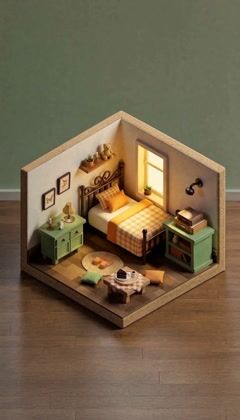
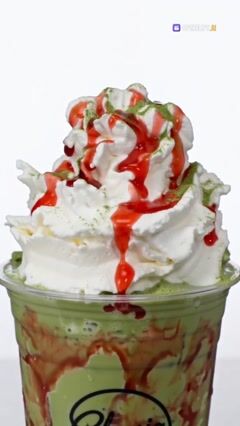
@image1 is a 3x3 storyboard reference. Its nine numbered frames define the order of the assembly, the studio viewpoint and the miniature model. The video plays these steps as one continuous full-frame vertical image, without the grid, gutters or numbers. @image2 is the closing-frame reference. It shows the finished full-size space exactly as the last frame must look, with the same framing, layout and lighting, and the video ends on a frame identical to it. Every element of the space, its design, material, colour and placement, comes from @image2, first at miniature scale and then at full size. In one continuous 15-second take with no cuts, one pair of realistic adult hands builds a miniature version of the space in @image2 step by step, in the order of @image1, on a seamless pure white studio sweep. Then a seamless scale match turns the miniature into the full-size space, and the video ends on @image2. Realistic live-action footage, crisp neutral whites, fine sensor grain. During the build the white sweep fills the frame edge to edge around the model, equally bright in every corner, flooded with strong, fully diffused light from every direction at once, as inside a large white light tent. Every surface of the model and the hands reads bright and evenly lit with true colours; only a faint soft darkening sits in the seams where two parts meet. Rules for the whole take: - The only body parts ever in frame are the two hands and their forearms, bare skin from the fingertips to the frame edge, with no sleeves, cuffs, gloves, rings, watches or bracelets. Each arm enters from the top, left or right edge and is cut off at mid-forearm by that edge. - Exactly one left hand and one right hand do all the work. Every part is gripped, carried and set by a single hand, and the two hands never hold the same part together. While one hand sets a part, the other carries the next part or rests at the frame edge. The hands move with quick, precise movements, and each finishes its placement before reaching for the next. - Every element enters only at the moment a hand places it. Until then its spot stays empty, and once placed it stays exactly where it was set. - The image stays clean from first frame to last: no text, titles, captions, numbers, logos, watermarks or overlays. - Every movement runs forward in normal time, and nothing moves in reverse. A wide shot opens on the plinth carrying only the bare floor, standing on the white sweep. The camera looks down at about 30 degrees, frontally and slightly from one side, matching @image1, and makes one slow, steady dolly push-in through the whole take. 1. A hand lowers the first bare wall onto the plinth edge and presses it down, and the remaining bare walls follow, one per hand. 2. The large built-in and fixed elements stand into place against the walls, one at a time. 3. The surfaces and fixed finishes that lie on top of them are lowered and pressed flush. 4. Appliances, fittings and fixtures are pushed and clicked into place, still unlit. 5. Free-standing furniture and any partitions or dividers are set down. 6. Lighting, textiles, rugs and plants are hung and placed. 7. The hands take turns placing the last loose objects and decor, each carrying one piece at a time. Then both hands withdraw past the frame edges and the model's lights glow on. 8. The frame holds only the model, with no body parts in view. The camera eases down to standing eye level and moves forward, and the miniature grows seamlessly into the full-size space. Only during this scale change does the white studio sweep give way to the real surroundings of @image2, its ceiling, its outer walls and its openings, as the light settles into the light of @image2. The shot lands on @image2 exactly and holds, with only small natural ambient motion. Steps 1 to 7 share the first twelve seconds evenly; step 8 takes the final three.
Drag the clip sideways


Your avatar fights a losing battle as they turn undead, ending as a frightening veined zombie. Music only, loud. See the video step for the full prompt.
Dark mist sweeps over your avatar and transforms their everyday look into a dramatic gothic horror costume, same face, confident and menacing. Music only, loud. See the video step for the full prompt.
A 22-second vertical 9:16 talking-product comedy ad. Photorealistic 3D character animation, cinematic. ASSET MAP — every reference is bound here and cited by tag below: @image1 — the magnesium product. This is the product's truth: its shape, material, colour, closure and every word printed on it. @image2 — the same product wearing its cartoon face and arms. This is the character design. PRODUCT LOCK — HIGHEST PRIORITY: the container is exactly the one in @image1. Preserve its shape and proportions, its material and colour, its cap or closure, and its label artwork exactly. Every word, number and symbol printed on it stays as photographed — same spelling, same typeface, same size, same position. Never add, remove, translate or re-typeset any lettering, brand name, logo, badge or seal. Wherever this text and the attached images disagree, follow the images. CHARACTER LOCK: the face and arms are exactly the ones in @image2 — same eyebrow weight and shape, same eye style, same mouth, same arm colour and thickness, same placement on the container. Do not redesign them. THE EYEBROWS ARE THE PERFORMANCE — two thick, solid, matte-black eyebrows shaped like bold brush strokes, clearly separated from the eyes and sitting well above them. They are the single most expressive element in the entire shot: they tilt, arch, furrow, raise and flatten on every emotional beat. They are never thin, never a mere eyelid line, and never absent from any frame. HANDS STAY CLEAR OF THE LABEL: the arms gesture beside the container and out to its sides, but never cross in front of its printed text. Every word on the product stays readable in every frame. THE BODY NEVER DEFORMS: the container does not stretch, squash, bend or hop. It stays standing on the counter. Only the face and the arms move. SET: a dark kitchen at three in the morning. The container stands on a stone counter. The only light is a cool under-cabinet strip and a faint glow from a doorway behind. A blurred kettle, a mug and a plant deep in the out-of-focus background. Quiet, still, nobody else in the room. CAMERA: one continuous shot, no cuts. It opens WIDE — the whole dark kitchen, the container small and alone on the counter — and pushes in slowly and steadily across the entire clip, arriving on a medium close-up of its face by the final line. The move is smooth and never stops. No handheld shake, no pan, no whip. VOICE: one voice, dry, weary and completely deadpan — something that has been waiting all day to say this. Not cartoonish, not sinister, not whispered. Ordinary speaking pace, with real pauses between sentences. PERFORMANCE AND LINES — it speaks these words, in this order, word for word, exactly once: 0–4s: wide shot. Arms crossed, eyebrows flat and low, already unimpressed before the clip starts. "Three in the morning. Calf cramp. And suddenly, you remember I exist." 4–9s: uncrosses its arms, one hand turning up in a small matter-of-fact shrug. Eyebrows level, plainly stating a fact. "I'm magnesium. I'm involved in hundreds of reactions in your body. Quietly. Every day." 9–14s: leaning into the grievance, eyebrows angling sharply down into a furrow, one hand pointing straight at camera on each question. Midway through this stretch a single tiny white spark flares off the cap for half a second and dies — it does not react to it. "That eye twitch last Tuesday? Restless legs at night? Your body was asking." 14–20s: one hand up flat in a stop gesture out to the side, then both hands opening outward. The eyebrows travel from firm and level to raised and almost pleading. "I'm not a painkiller. Don't wait for the cramp — take care of your magnesium first." 20–22s: the arms drop to its sides, the eyebrows settle flat, the eyes glance away, and it holds there as the camera settles on its face. "...I'll be here." AUDIO: quiet night room tone throughout, a faint fridge hum. One soft electrical tick on the spark. The voice. No music bed, no score under the dialogue. NEGATIVE: on-screen text, captions, subtitles, a watermark, a brand name, an invented logo, added or altered lettering, garbled label text, a hand covering the label, thin eyebrows, missing eyebrows, a human, hands belonging to a person, a second container, a second character, a face on any other object, photorealistic human eyes, teeth, lips, stretching, squashing, bending, hopping, the container leaving the counter, camera cuts, handheld shake, flickering light, horror atmosphere, sinister tone, spilled capsules.


Your avatar tours a haunted mansion at night as the house comes alive with dread, ending with a ghost appearing right behind them. Music only, loud. See the video step for the full prompt.
Match the ORIGINAL 15s 9:16 FILM shot-for-shot. Not a storyboard poster. Not a 2x2 grid. No on-screen campaign type. @image1 = THE BOTTLE. Photocopy its stopper, collar, liquid colour and every label word and mark exactly as printed. NEVER a can. @image2 = THE CRYSTAL ROCKS GLASS. Photocopy the glass exactly as shown — shape, cut and contents. Ignore bar bottles behind it. 15 seconds, 9:16, dark glossy studio, mirrored black floor, red-black bokeh. No people. AUDIO: ice rumble, spider-crack, explosive shatter, whoosh, pour, clink. No speech. 0.0–2.0s RECTANGULAR ICE BLOCK. The bottle stands fully trapped inside a tall clear ice prism, cracks already in the ice, shards at the base, reflection on the floor. Slow push-in. Product fills the block like the original can-in-ice. 2.0–3.5s SPIDER CRACK. Extreme close: ice in front of the bottle, radial fracture lines, a stream of water shooting across the crack. Macro. 3.5–5.0s TOP. Extreme close looking down on the bottle's stopper and collar, heavy condensation droplets, water splash above. No pull-tab. No can lid. 5.0–7.0s BURST. The bottle explodes out of the ice on a diagonal, flying toward camera, hundreds of ice cubes blasting radially, motion blur on shards, bottle sharp and readable in the center. 7.0–9.0s ORBIT. Bottle tumbling slowly in a vortex of ice and mist, wet glass, dark studio. Full 360 sense. Not standing still. 9.0–11.0s POUR. Macro: the spirit (its colour exactly as in @image1) pouring from the bottle neck into @image2's rocks glass packed with ice. Splash, bubbles, orange peel if it fits. High-speed. 11.0–15.0s HERO TWO-UP. Bottle LEFT, filled crystal glass RIGHT, ice chunks on a mirrored black floor, red-black bokeh, condensation, reflections of both. Slow push-in. Last second HOLD. No text, no slogan, no can. NEGATIVE: a can, pull tab, storyboard grid, posters, captions, extra bottles, people, warped bottle.
Your avatar runs from a giant monster in the dark, gets caught, and the clip ends on a horrifying close reveal of the creature. Upload your own avatar (@image1) and monster (@image2). Music only, loud. See the video step for the full prompt.
Your avatar becomes a pale, fully translucent ghost, drifts off the floor, and fades from view at the end. Music only, loud. See the video step for the full prompt.
A two-step recipe for the talking-product format: an image step turns the uploaded packaging into a character, and a Seedance 2.5 step gives it a 25-second monologue in one continuous take with a moving camera. WHAT TO EDIT WHEN YOU RUN IT: the monologue in step 2. The words between the { } braces are an example — replace them with your own and keep the braces. Budget roughly 65-70 words for 25 seconds; more than that and the model compresses the closing lines until they are swallowed, which is the single commonest way this format fails. WHY THE SPEECH CLOCK IS IN THE PROMPT: without it the model runs the monologue too fast and leaves four or five seconds of dead air at the end, or crushes the last two sentences into two seconds. With the clock written out the pauses land within a few tenths of a second of where they are asked for. WHY THE HANDS ARE CONSTRAINED: on an early render of this format the direction said 'raises a single index finger' and the model raised the middle finger instead, and held it for ten seconds. A stubby cartoon hand cannot isolate one digit reliably, so both steps forbid pointing and finger-counting and use whole open palms. KNOWN WEAKNESS — READ BEFORE USING A REAL BRAND: step 1 does not always respect the printing on the packaging. On the example shown here it rotated the label ninety degrees and added two words that were not on the input photo. The prompt now forbids this explicitly, but check the step 1 output before spending on step 2, and re-run step 1 if the wording or its orientation has drifted. THE PROP IN STEP 2 IS OPTIONAL: the fizzing glass suits an effervescent tablet and nothing else. It is left in the prompt as a worked example of the technique, because a prop that visibly changes from the first frame to the last is a clock the viewer can read and it proves the take was never cut. Swap it for something that changes in your own product's world, or delete the block. PREVIEW: produced by this chain at 720p. Step 2 runs at 1080p for a finished ad.

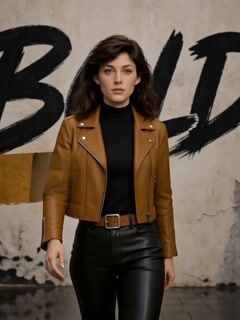 Poster Wall Kinetic TypeRecreate workflow