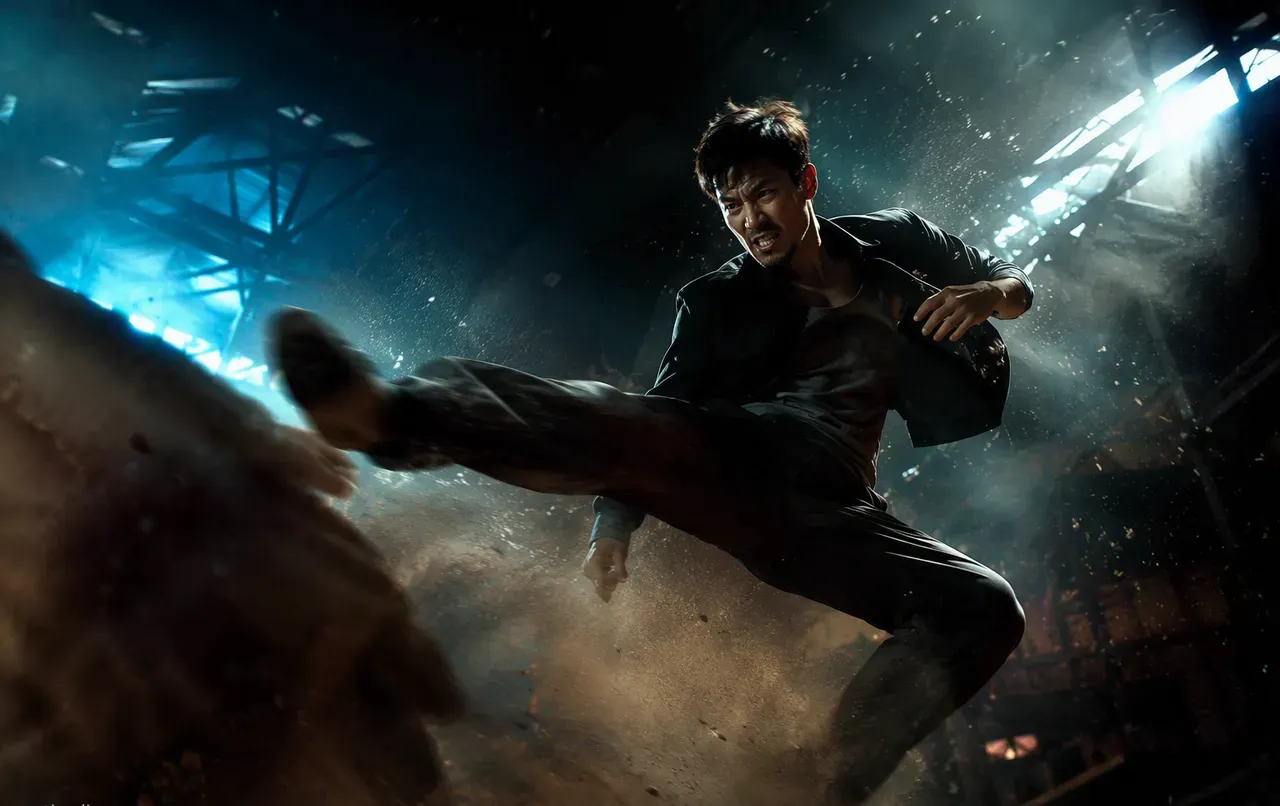
ByteDance’s director-grade model
Seedance is the model that made professionals take AI video seriously. Where most models treat your prompt as a suggestion, Seedance 2.5 treats it as a shooting script: named characters, numbered references, explicit camera moves, timing. Feed it up to 50 reference images — your product, your actor, your location, your style frames — and it holds them all in a single coherent take of up to 30 seconds. That’s not a demo trick; it’s the difference between AI video as a toy and AI video as a crew.
Seedance 2.5 vs 2.0 4K on OpenClips
Seedance 2.5 is the control flagship: multi-reference input, the strongest prompt adherence in the roster, 30-second single takes. It’s the model for scenes that must match a storyboard. Seedance 2.0 4K trades a little control for native 4K output — when the final has to hold up on a TV, a billboard, or a cinema pre-roll, this is the render. The versions table above shows both, live, with real prices.
What it’s best at
Cinematic scenes with multiple anchored elements. Product films where the product must stay pixel-consistent. Character work across a series. Complex camera choreography — “crane down through the skylight, then dolly left” — that other models ignore. Where it’s less strong: quick cheap drafts (use Hailuo 02) and native audio (use Veo 3). The honest answer to “is Seedance worth it” is: for the shot that has to be right, yes; for the tenth variation of a sketch, no. Cast accordingly — that’s the whole point of a multi-model platform.